

CCTV PoE Switch – A Reliable Choice for Modern Security Networks

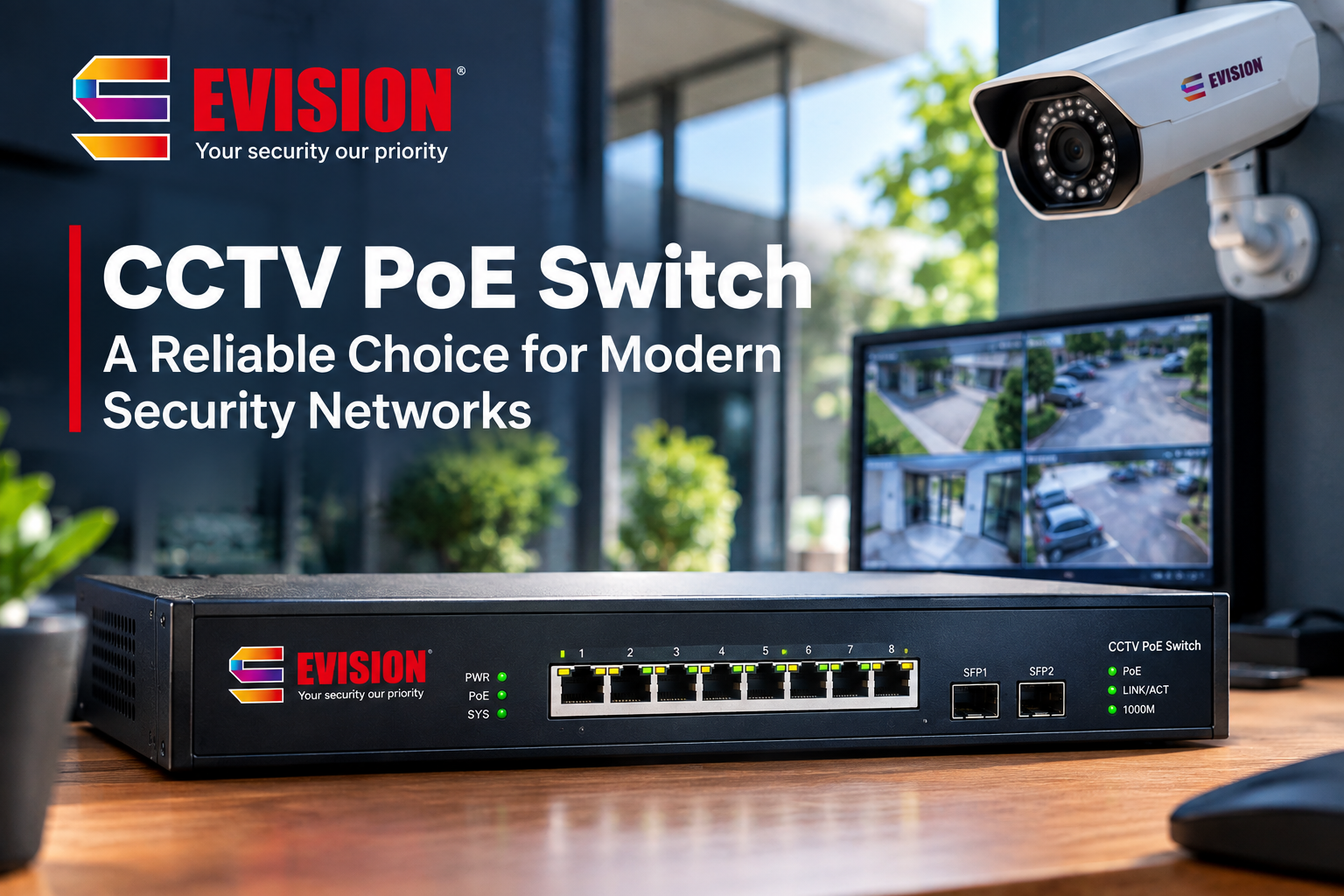
Modern IP surveillance systems need more than high-quality cameras. A reliable network is equally important for transmitting video data smoothly and keeping connected security devices organized. A CCTV PoE Switch provides a practical networking solution by connecting compatible IP cameras while delivering power and data through Ethernet.
For offices, warehouses, retail stores, commercial buildings, and other properties, selecting the right PoE networking equipment can simplify installation and support a scalable surveillance infrastructure. E-vision offers CCTV and networking solutions designed around the requirements of modern security systems.
What Is a CCTV PoE Switch?
A CCTV PoE Switch is a network switch designed to connect PoE-enabled IP cameras and other compatible devices. Power over Ethernet (PoE) allows electrical power and network data to travel through a single Ethernet cable.
This can reduce the need for separate power adapters near each camera and make CCTV installations more organized.
A PoE switch can commonly connect:
- IP CCTV cameras
- NVR systems
- Wireless access points
- Access control devices
- Other PoE-enabled equipment
How Does a PoE Switch Improve CCTV Installation?
Simplified Cabling
With compatible PoE cameras, one Ethernet cable can carry both power and data. This can make installation more convenient, particularly when cameras are positioned away from readily available power outlets.
Centralized Connectivity
A switch provides a central connection point for multiple cameras. This helps installers organize network connections and makes the overall surveillance infrastructure easier to manage.
Flexible Camera Placement
PoE can provide power through network cabling, allowing compatible cameras to be installed in locations where running separate electrical connections may be inconvenient.
Easier Expansion
Security requirements can change as a property grows. A switch with adequate ports and network capacity can provide room for additional cameras and other connected devices.
Key Features to Consider
Choosing the right switch requires understanding the requirements of your CCTV installation.
Number of ports: Select enough ports for your current cameras and allow some capacity for future expansion.
PoE power budget: Check the total power consumption of connected cameras and make sure the switch provides sufficient PoE capacity.
Network speed: Gigabit Ethernet can be beneficial for surveillance networks using multiple high-resolution IP cameras.
Uplink options: SFP or fiber uplinks can provide flexibility when connecting different network segments or longer-distance links.
Managed or unmanaged: Managed switches offer additional network configuration and monitoring options, while unmanaged switches can be suitable for straightforward installations.
Camera compatibility: Always check the camera’s PoE standard and power requirements before installation.
CCTV PoE Switch for Different Security Environments
A CCTV PoE Switch can be used across a variety of surveillance applications. Offices may use PoE networking to connect cameras around entrances, workspaces, and common areas. Warehouses can use IP cameras to monitor storage and loading zones, while retail businesses can deploy surveillance around sales floors and entrances.
For larger installations, factors such as camera resolution, bandwidth, power requirements, uplink capacity, and transmission distance should be considered when planning the network.
How to Choose the Right PoE Switch for CCTV
Start by determining the number of IP cameras you plan to connect. Then identify the power consumption of each camera and calculate the total PoE requirement.
Next, consider the network speed required by your cameras and recording system. High-resolution cameras can generate significant video traffic, so adequate network capacity is important.
For larger installations, consider whether you need managed switching, SFP connectivity, or fiber uplinks. Planning for future cameras can also help create a more scalable network.
Why Choose E-vision?
E-vision provides networking and surveillance solutions for modern security requirements. Its product range includes Ethernet switches, PoE networking products, CCTV cameras, AI-based surveillance solutions, and related security equipment.
By selecting equipment based on camera requirements, PoE capacity, bandwidth, port count, and network design, businesses can build a CCTV infrastructure suited to their specific environment.
Conclusion
A reliable network plays an important role in modern IP surveillance. A CCTV PoE Switch can simplify installation, provide centralized connectivity, deliver power to compatible cameras, and support the expansion of security systems.
Before selecting a switch, evaluate the number of cameras, PoE power budget, network speed, uplink requirements, and future expansion plans. With suitable networking and surveillance solutions from E-vision, businesses can build a structured and efficient CCTV network.
Frequently Asked Questions
1. What is a CCTV PoE Switch?
It is a network switch that connects compatible IP cameras and can provide both network connectivity and electrical power through Ethernet.
2. Can a PoE switch power every CCTV camera?
No. The camera must support PoE, and its power requirements must be compatible with the switch’s PoE standard and available power budget.
3. How many cameras can a PoE switch support?
The number depends on the available Ethernet ports, PoE power budget, network capacity, and the requirements of the connected cameras.
4. Is Gigabit connectivity useful for CCTV?
Yes. Gigabit Ethernet can be useful for surveillance networks with multiple high-resolution cameras and substantial video traffic.
5. Should I choose a managed or unmanaged switch?
For simple CCTV networks, an unmanaged switch may be sufficient. Managed switches can provide additional configuration, monitoring, and network management capabilities.